Public Safety and Health Initiatives in Homs Address Stray Dogs and Antimicrobial Resistance
The city of Homs has recently
witnessed parallel efforts aimed at strengthening public safety and improving
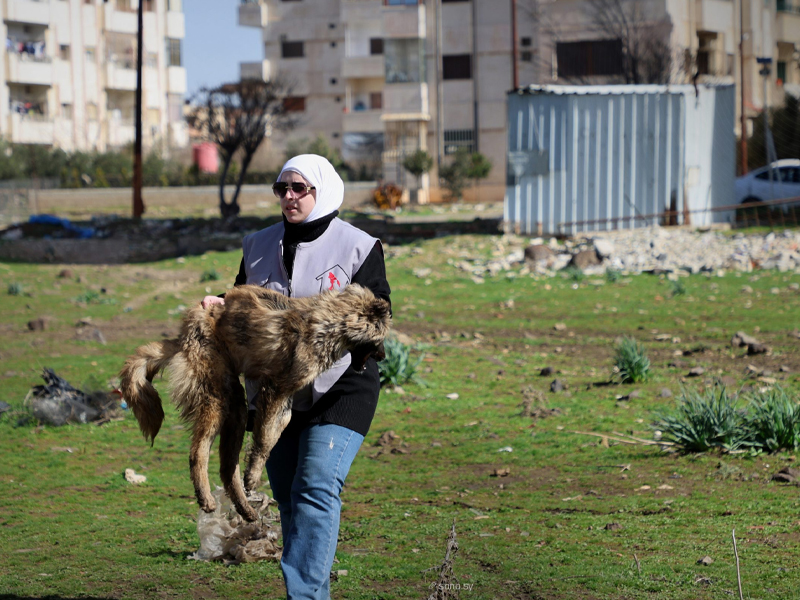
health practices. These efforts include a large‑scale campaign to collect stray
dogs and a specialized training workshop on antimicrobial resistance organized
by the Ministry of Health in cooperation with the World Health Organization.
Stray Dog Collection Campaign Enhances Public Safety
The Pet Animal
House Association, in cooperation with the Homs City
Council, launched a campaign to collect stray dogs from several
neighborhoods, including Al‑Waer, Al‑Armen, Al‑Zahraa, Al‑Muhajireen, and Baba
Amr, as part of ongoing efforts to enhance public health and safety.
Comprehensive
Veterinary Care
Collected dogs are transported to
the association’s facility near Tadmor Roundabout, where they receive:
·
sterilization
·
vaccination
·
tagging
·
full medical
examinations
All procedures follow approved
humane and health standards.
Logistical
Support from the City Council
Youssef Dayyoub, Deputy Director
of Sanitation, explained that the council provided logistical support by:
·
allocating
land near Tadmor Roundabout
·
clearing
debris and preparing the site
·
building a
fence and installing a gate
·
supplying a
water tank
·
assigning a
vehicle and driver to support field operations
Citizen complaints are received
through email and social media channels, in coordination with neighborhood
committees.
Organized
Work and Ongoing Challenges
Association president Aya Bakour
stated that the field team includes a veterinarian and four trained volunteers,
working according to a structured plan that ensures humane treatment from
collection to completion of care. She noted that around 15
campaigns were carried out in the past three months, despite
challenges such as the high number of stray dogs and limited funding, as the
association relies mainly on donations.
Campaign
Objective
The campaign aims to reduce stray
dog populations, respond to citizen concerns, and ensure responsible and humane
treatment of animals, contributing to improved public safety in the city.
Training Workshop on Antimicrobial Resistance
The Ministry of Health’s
Directorate of Communicable and Non‑Communicable Diseases, in cooperation with
the World Health Organization, held a workshop titled “Antimicrobial
Resistance and Antibiotic Stewardship” at the University Hospital in
Homs.
Strengthening
Evidence‑Based Medical Practice
Dr. Fahd Shreibati, Director of
the University Hospital, emphasized that the workshop is part of a broader
strategy to improve medical and pharmaceutical performance by promoting
evidence‑based prescribing practices. These efforts help:
·
enhance
patient safety
·
reduce the
spread of antimicrobial resistance
·
improve
overall healthcare quality
Challenges of
Antimicrobial Resistance in Syria
Dr. Aya Alfa, head of the
antimicrobial resistance program in Homs, explained that resistance remains a
major public health challenge, especially due to:
·
the impact of
conflict on the health system
·
limited
diagnostic capacity
·
the need for
greater awareness among healthcare workers
The workshop aims to strengthen
practical application of antibiotic stewardship principles.
Scientific
Sessions and Expert Contributions
The workshop included:
·
multidisciplinary
sessions for doctors and pharmacists
·
scientific
lectures by leading experts
·
case‑based
discussions tailored to local conditions
·
interactive
sessions for pharmacists
Experts contributing to the
workshop included Dr. Yasser Al‑Frouh, Dr. Ola Ebara, Dr. Banan Kharrat, and
Dr. Ahmad Qajja.
Alignment
with WHO Guidelines
The Ministry of Health continues
to align national practices with WHO recommendations by:
·
strengthening
healthcare workforce capacity
·
developing
stewardship systems
·
promoting
rational antibiotic use
·
reducing the
rise of antimicrobial resistance

Leave a Reply
Your email address will not be published. Required fields are marked *
Search
Category